5 Month Composer Academy/Intensive
Want to make a career as a film composer? Discover a five-month intensive course for composers that opens doors to the film industry.
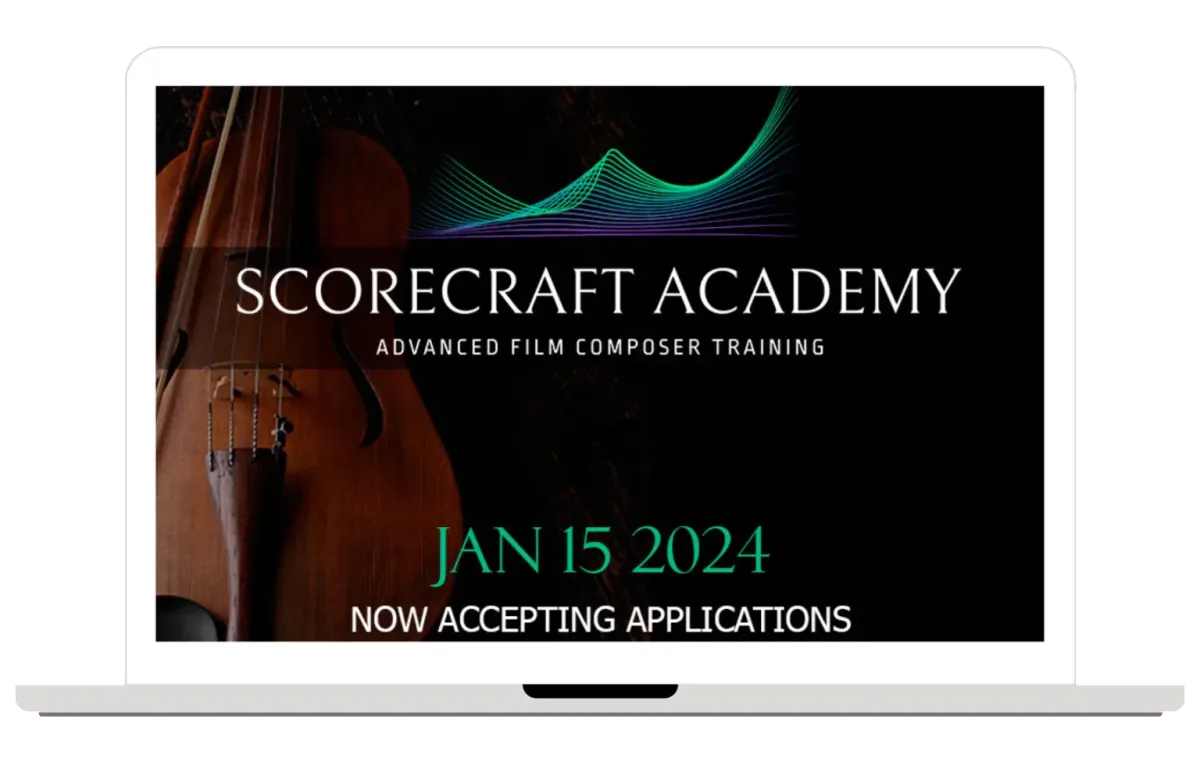
5 Month Composer Academy/Intensive
Want to make a career as a film composer? Discover a five-month intensive course for composers that opens doors to the film industry.
Master Class From Successful
Welcome to the Scorecraft Academy, where music’s enchantment meets storytelling’s enchantment. Dive into a world of melodies and emotions as we guide you through the core of film composing.
This program not only imparts the skills of scoring to picture but also offers a
comprehensive understanding of the business dimension.
An overview of the program with our director, Michael Whittaker
5 Month Intensive Begins Jan. 15 (Limited To 20 Students)
Secure Your Spot by Enrolling Now!
What makes us different than any other program
Discover your dream job as a film composer with our 5-month Composer Academy/Intensive. Join our easy-to-follow course led by experienced mentors—well-known film composers who will guide you step by step. No matter your musical background, come unleash your creativity with us!
Personalized Mentorship
Full Business Training
Pitch you to Real World Clients at the end of the Program.
Personalized Mentorship
Full Business Training
Pitch you to Real World Clients at the end of the Program.
Master Class From Successful Film Composers
Passion and affinity for music and film art.
Take your first steps and make this your profession with renowned film composers with decades of experience in the music industry and creators of memorable pieces in film and television.
This program gives you exclusive and
unique access to their creative process. They will teach you their film composition techniques, how they work, and how they create and select the piece to complement and give a touch of life to each scene.
You will learn what inspires them, how they create harmony and melody, and how they use notes and chords, so you can develop the necessary skills and abilities that will allow you to capture your inspiration and captivate the audience.
Score Craft Academy Syllabus
Outline

WEEK 1 PART ONE - CHORDAL STATE LECTURE

Chord States – constantly change based on harmony, melody, and film emotion
Grounded state versus Ungrounded state.
Grounded states and examples
Ungrounded states examples including altered tone degrees or dissonance.
Tools to use in between Grounded and Ungrounded, when you don’t know what the emotion will be:
Lydian Mode “chord” – Root + Major Third + Flatted 5th
Augmented triad example
Suspended triad
Intervallic triad
Spotify Listening – Film Score Intensive 1 playlist.
Homework Session – Thor Love & Thunder cue
Questions to ask at a Spotting Session
WEEK 1 PART TWO - SPOTTING, DIALOG, SCORING DEVICES
Writing around dialogue
Musical Devices – Key, Mode, Register, Tempo, Density, etc
Review Michael’s Thor cue – introduction to the review process

WEEK 2 PART ONE - Animated Scoring and intro to Harmonic textures
Review of students’ Thor cue
Monophonic Orchestration Style (#1) from George Frederick McKay’s Creative Orchestration – 8 Orchestra Textures
Tools to use in between Grounded and Ungrounded, when you don’t know what the emotion will be:
Homework – Sonic the Hedgehog cue
WEEK 2 PART TWO
Review of students’ Thor cue

WEEK 3 PART ONE - Expanded Harmony and intro to comedy writing
Chordal Harmony (#2) and Onomatopoeia (#8) Orchestration Style
Chordal Harmony – melody is supported by chords, without countermelody or conter-rhythm, in its entirety.
Onomatopoeia – music sounds like its subject – any musical device you can think of.
Monophonic Orchestration Style (#1) from George Frederick McKay’s Creative Orchestration – 8 Orchestra Textures
Review of students' Sonic cue
Kids's Music and Comedy - Types of writing - bumper based shows, rock/pop, cheesy and sparse, short stings or reactionary scoring, electronic/EDM, classic lo-fi, instrumentation, etc.
Homework – Little Margo cue
WEEK 3 PART TWO - THURSDAY-SCI FI Music, Chromatic Expansion and Hans Zimmer Music
Review of students’ Sonic cue
“How DUNE Composer Hans Zimmer created the Oscar winning score l Vanity Fair” YouTube video
Review of students’ Little Margo cue

WEEK 4 PART ONE - Chromatic expansion, polyphonic texture, Sound design drones
Polyphonic Writing, Orchestration Style – consists of two or more simultaneous melodic lines. Similar to fugues or counterpoint. Maybe side by side to start, then together.
Spotify listening playlist – Polyphonic Harmony
Chromatic Expansion – Take the top voice and go up chromatically while chords change underneath.
Review students’ Little Margo cue
Making a Drone using a Synth Plugin
Homework – Mandalorian cue
WEEK 4 PART TWO - LIVE SCORING “STAR WARS” SPEED WRITING
LIVE Scoring session – Star Wars Carbonite – spotting and scoring
Loopback sample setup

WEEK 5 PART ONE - Modulations, secondary harmonic dominants, James Bond Music(SPY)
“Kobe Bryant’s Greatest Speech – BEST Motivation Ever” YouTube video
Review of students’ Mandalorian cue
Secondary Harmonic Dominants (teoria.com) – method of prolongation of the chordal structure and movement to another chord or key, including false cadences.
Spotting session – Golden Eye cue
WEEK 5 PART TWO - Templates Intro including libraries, MIDI CC
Spotify playlist – Bond Music – Spy music – review instrument palette and playing styles.
“John Barry and David Arnold – The Music of James Bond” YouTube video – music review
MIDI CC’s – 1, 7, & 11 – how to get a quick and dynamic response from brass and strings.
Michael shares a look at his Template and favorite Libraries.

WEEK 6 PART ONE - James Newton Howard, Trailer music,
“The Pretty Woman soundtrack changed my career / James Howard Newton on Composing” YouTube review.
Review of students’ Golden Eye cue
Trailer & Promo Music – both part of music library music
Promo – Station promotes a new show or episode coming up
Trailer – written in shorter sections, not a lot of modulation or melody, with editable hit points, ostinato, swells, etc.
Spotting session – Joker Trailer cue
WEEK 6 PART TWO - Guest in depth dive of Vienna Ensemble and Midi mapping/articulations
Guest teacher Steve Steele – Creating Articulation Maps, Vienna Ensemble Pro, Babylon Waves Art Conductor, MIDI CC’s, creating a workflow and Aux’s in your Template in detail.

WEEK 7 Part 1 - Sound Design,Reharm progressions, Motifs and themes
Sound Design – anything non-orchestral or non-band oriented
Best chance of success in trailer music if you are good at sound design – more important than how good you are at orchestral music.
Spotify listening playlist – Sound Design
Incorporating Sound Design alongside Orchestral music in trailers, so you can hardly tell which is which. Strings and Synths made to sound like one thing – together.
Review of students’ Joker Trailer cue
Spotting session – Star Wars Return of the Jedi cue.
WEEK 7 Part 2 - Reharm discussion including John Williams, Hybrid Brass
Reharmonization – cool chord progressions
vi-IV-II is a very powerful one, cinematic, gets you out of one key
vi-IV-VII keeps building and overcoming.
Variations: I-iv6-II Great for REVEALS with the last chord
Hybrid String-Synth and Brass-Synth creation
How to make a Hybrid Synth & Orchestral String instrument from scratch, including many FX plugins
Star Wars Theme Reharmonization ideas
WEEK 8 PART 1 - SATB Scoring, Homophonic textures, Musicals
Homophonic Texture orchestration style – Melody with texture of chords underneath. SATB writing.
Review of students’ Star Wars Return of the Jedi cue.
Homework – Lion King cue
WEEK 8 Part 2 - LIVE SATB SCORING, VOICE LEADING in film Scores
Review of students’ Star Wars Return of the Jedi cue.
LIVE Scoring – SATB
“The Orchestration Method that ALWAYS Works by Ryan Leach” YouTube video review.
WEEK 9 Part One - ADVENTURE MUSIC, Advanced Orchestral Devices
Flying and Adventure music - instrumentation and characteristics
Review of students’ Lion King cue
Homework – Jurassic Park cue
Orchestral Devices
Bi-tonal division – ability to superimpose other modes over/under your melody
Metric Modulation
Elongation
Melodic Counters
Register Division
Analysis of 1 minute of John Williams’ Jurassic Park Conductor’s score
WEEK 9 PART 2 - MUSIC BUSINESS PART 1, MUSIC LIBRARIES, BRAND DEVELOPMENT
Analysis of Jurassic Journey to the Island
Review of students’ Lion King cue
Music Business – Pitching to Music Libraries – What to Do
Creating your own catalog, brand and unique perspective.
Write a few paragraphs about your “Brand”.
WEEK 10 PART ONE - WESTERNS AND THEIR TRADITIONAL ORCHESTRAL DEVICES
Review of students’ Jurassic Park cue
Western Music review – instrumentation, characteristics, etc
Western Sub-Styles –
The Good, The Bad and The Ugly
Aaron Copland Heroic style, such as Billy the Kid
Spotify listening playlist – Westerns FSS
Spotting session – Butch Cassidy cue
Review of Western music sample libraries
WEEK 10 PART TWO - WRITING TRANSITIONS, VERTICAL AND HORIZONTAL COMPOSITIONAL SYLES
Review of students’ Jurassic Park cue
Transitions in compositional scoring
Trumpet Transition sample
Displaced Entry Transition
Major 7 on the V chord Transition
Rhythmic Displacement Transition
WEEK 11 PART ONE - ORCHESTRAL REDUCTIONS, HOLST ANALYSIS AND USES
Review students’ Butch Cassidy cue
20th Century Orchestration Style –
Holst: The Planets listening and review instrumentation and characteristics
Analyze “Mercury, The Winged Messenger” section
from The Planets, and do a Score Reduction.
Dovetailing – when you move the melody or something up and down in register and section of the orchestra.
Major Tetrachords
Staggered triads in the Harp
“The Planets: Mercury, the Winged Messenger Score Reduction and Analysis” YouTube video
HOMEWORK – Spiderman cue
WEEK 11 PART TWO - INVERVALIC WRITING,IN CLASS SCORE
Review students’ Butch Cassidy cue
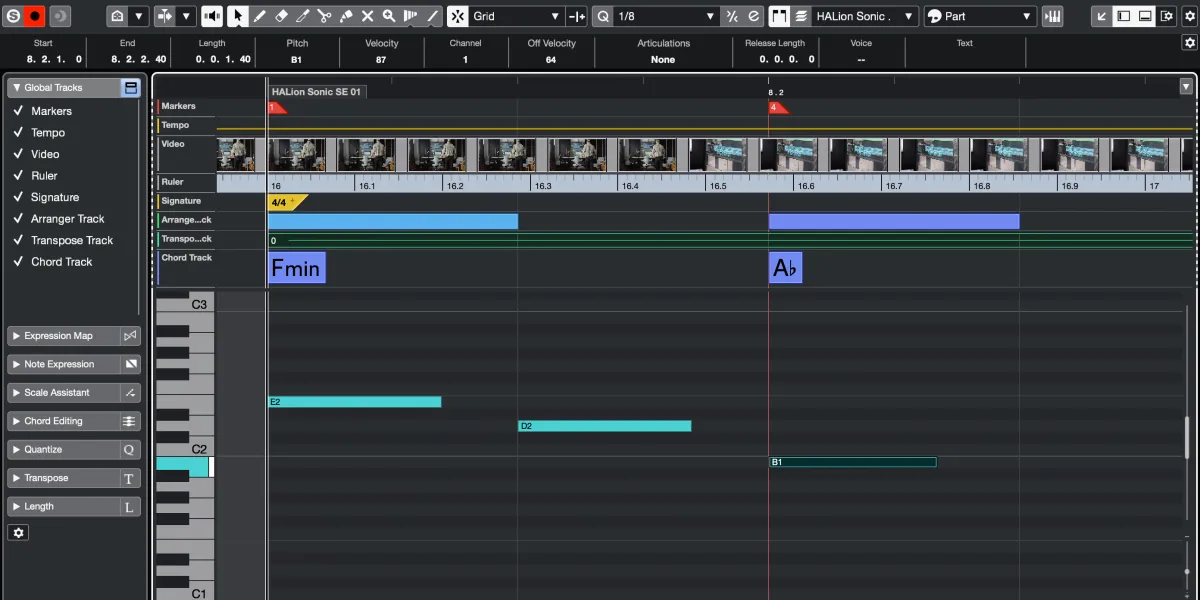
Intervalic writing style (from Paraschetti book on 20th Century writing) – can be used under dialogue and can also be a way to transition between tension and release. The point is to create tension under the score without key and mode. Move by chord or by single notes. Every interval in a melody has an emotion. Review each one.
LIVE scoring – write a melody with 2 woodwinds, with 4 changes in the melody, 4 intervals. Harmonize with another instrument underneath. Note change in emotion.
Two levels to Intervallic writing – Melody and Harmonization
WEEK 12 PART ONE - HYBRID SCORING INTRO
Review students’ Spiderman cue
Hybrid Sound Design Music inspired by Songs
How to make a Pulse from scratch, including FX plugins
Favorite plugins and libraries
Spotting session – The Matrix lobby shootout cue
WEEK 12 PART TWO - ADVANCED SOUND DESIGN AND PROJECT PITCH CREATION
Review students’ Spiderman cue
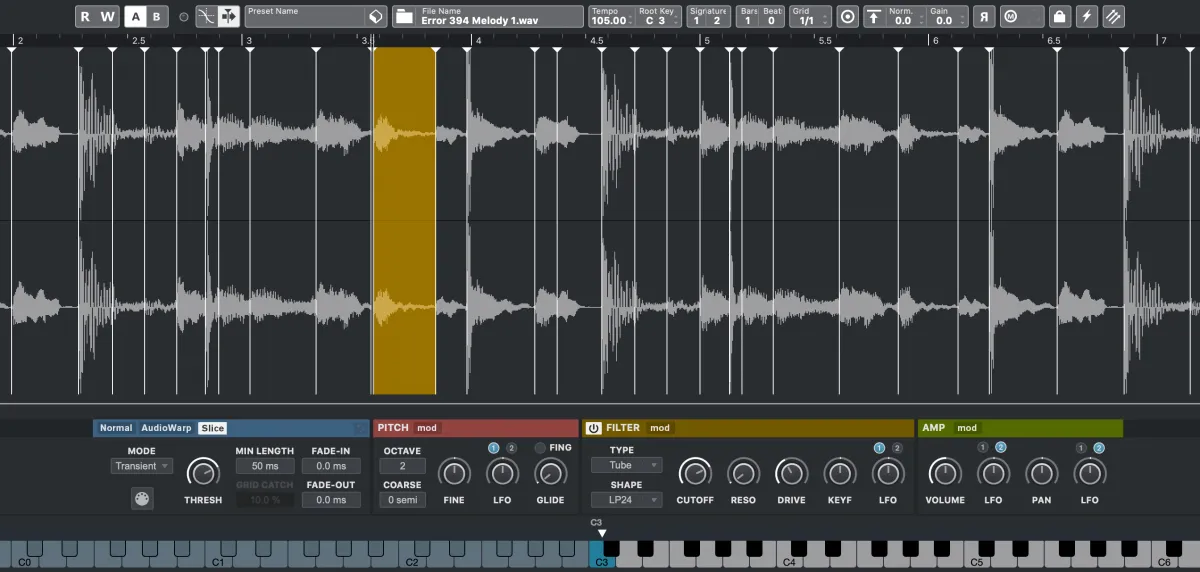
Stylus RMX and REX files
Audio Mangling tools and favorite plugins
LIVE scoring – Record something audio, chip it up, reverse, delays, distortion, glitches, etc. Make an instrument out of it.

WEEK 13 PART ONE - MUSIC OF JERRY GOLDSMITH, SCI FI, HORROR MUSIC
Review students’ The Matrix cue
Horror music – instrumentation and characteristics, sample libraries
Alien soundtrack by Jerry Goldsmith analysis
Spotify listening playlist – Week 4 FSS Horror
Spotting session – Prey (Predator 7) Final Battle Predator vs Naru Fight Scene cue
WEEK 13 PART TWO - MIXING PART ONE
Review students’ The Matrix cue
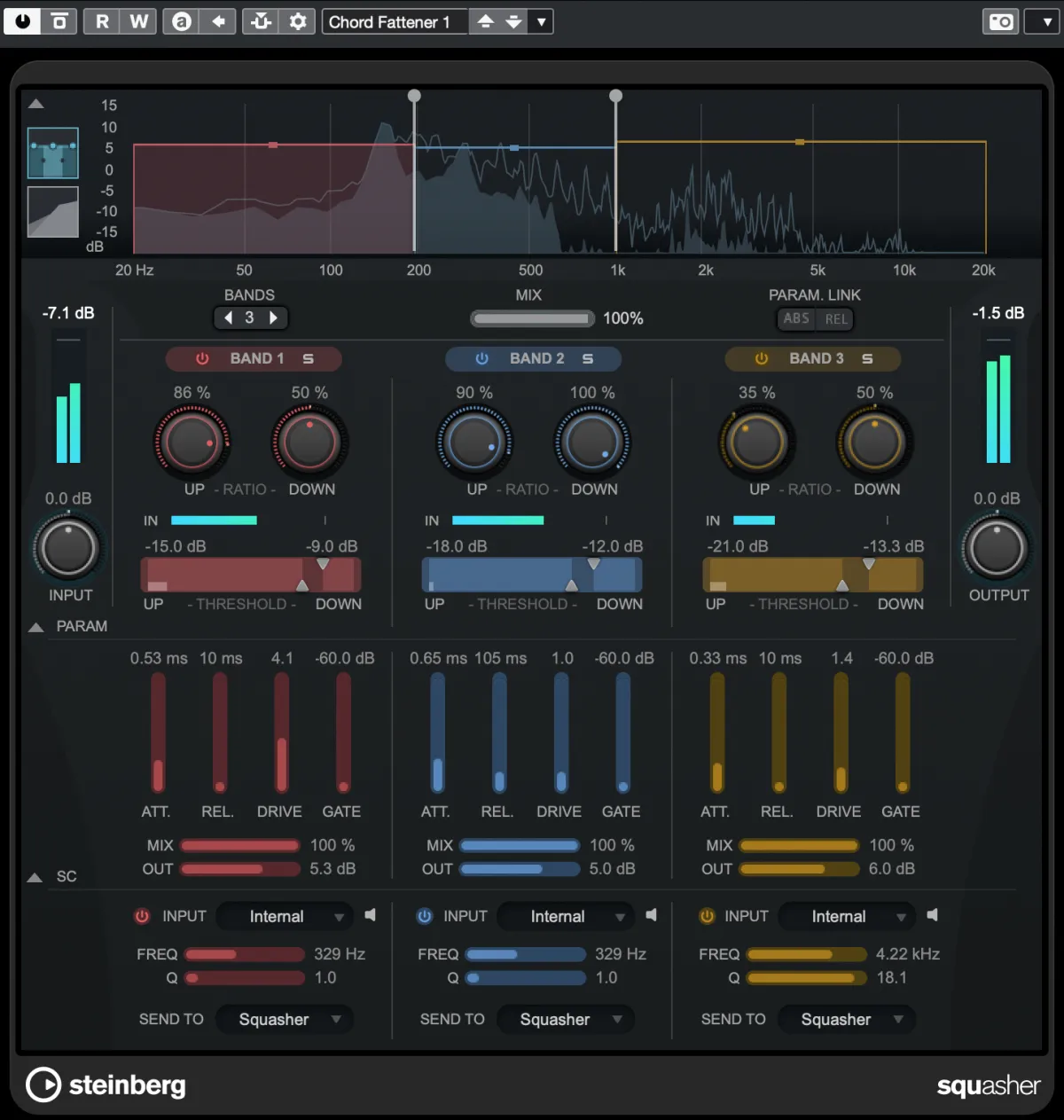
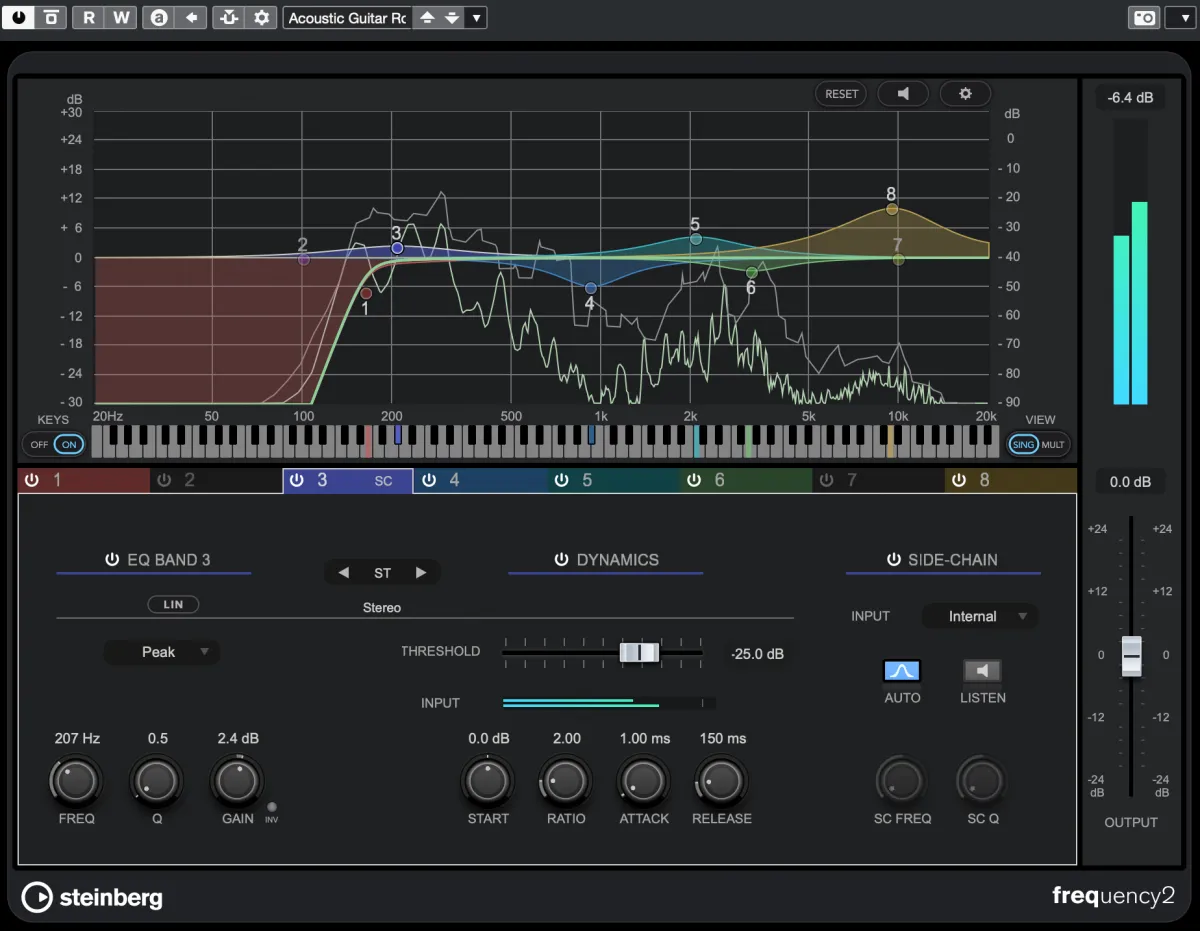
Mixing – Thing in Frequency Ranges. Group tracks by frequency
How to treat Tracks and Stems
EQ can be built into your Template. Every
project may be different, though.Make a Bus/Aux Track for each plugin effect.
Compression, Reverb, EQ etc. concepts and products
How to Set Up a Master Bus

WEEK 14 PART ONE - ATONAL MUSIC
Review students’ Prey cue
Atonal music style – instruments, characteristics, sample libraries
How to treat Tracks and Stems
Two ways to increase emotional intensity –
speeding up or down, crescendo/decrescendoHomogenous instruments or Non-Homogenous instruments
Alien soundtrack by Jerry Goldsmith analysis
Spotify listening playlist – Week 4 FSS Horror
Spotting session – Prey (Predator 7) Final Battle Predator vs Naru Fight Scene cue
12-tone system of writing
Use Intervals in dissonant shapes
Alternate mild consonant interval to a more dissonant interval in succession
Clusters
WEEK 14 PART TWO - SWITCHING STATES AND EMOTIONS RAPIDLY, MIDI MOCKUP
Review students’ Prey cue
LIVE Scoring – Atonal to Tonal – Grounded to Ungrounded
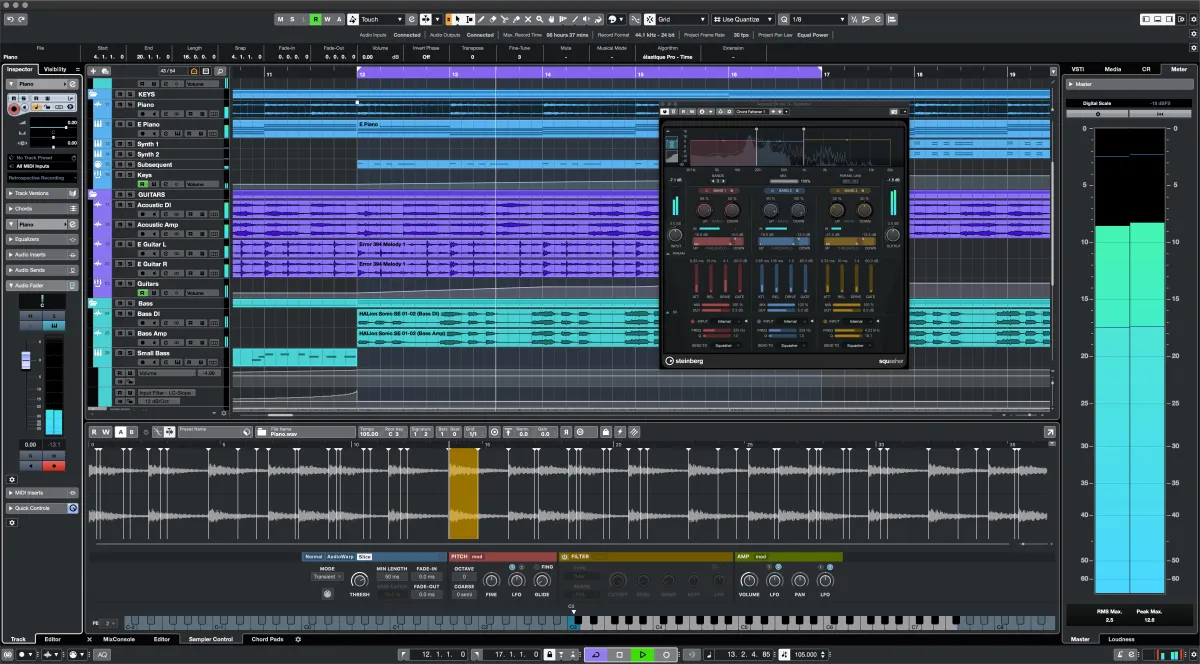
How to Record Initial Volumes into MIDI Instrument Tracks (and Gainstaging
Adjusting CC’s on instruments, stems, leaving headroom on the master bus

WEEK 15 PART ONE - TEAM SCORING WEEK, BERNARD HERMANN
Spotify listening playlist – Film Score History – Bernhard Herman, Vertigo & Psycho film scores
Review students’ Mizimono cue
Working with a Team – Work in pairs remotely to write Great Wolf Lodge cue.
Some of the best film score composers today have
teams – Hans Zimmer, Harry Gregson-Williams, etc.Who will write what? Style? Tempo? Key? Who will do the Deliverables to submit to Producer?
HOMEWORK – Great Wolf Lodge cue
WEEK 16 PART ONE - COMPUTER TECHNOLOGY, ROMANTIC COMEDIES
Computer configuration – Tech spec discussion regarding requirements for a good computer or network – size, speed, etc.
Review students’ Great Wolf Lodge TEAM cue
Romantic & Romantic Comedy music -
Instruments, writing styles, sample libraries
Woodwinds feature heavily, Pizzicato, Lydian mode, mallets, not super heavily orchestrated, etc
Write a Romantic Theme for violin. Deliver a chart for just the violin part. Send audio of orchestration or accompaniment with separate click track. Next week, we’ll have a live violinist in the studio to play and record your theme.
Spotify listening playlist – Romantic Comedy Score review
HOMEWORK – Titanic cue
WEEK 16 THURSDAY - LIVE RECORDING IN CLASS WITH STRING PLAYER
WEEK 17 PART ONE - SYNC MUSIC,PROMO MUSIC, HITS SLAMS, DRUMS
Review students’ Titanic cue
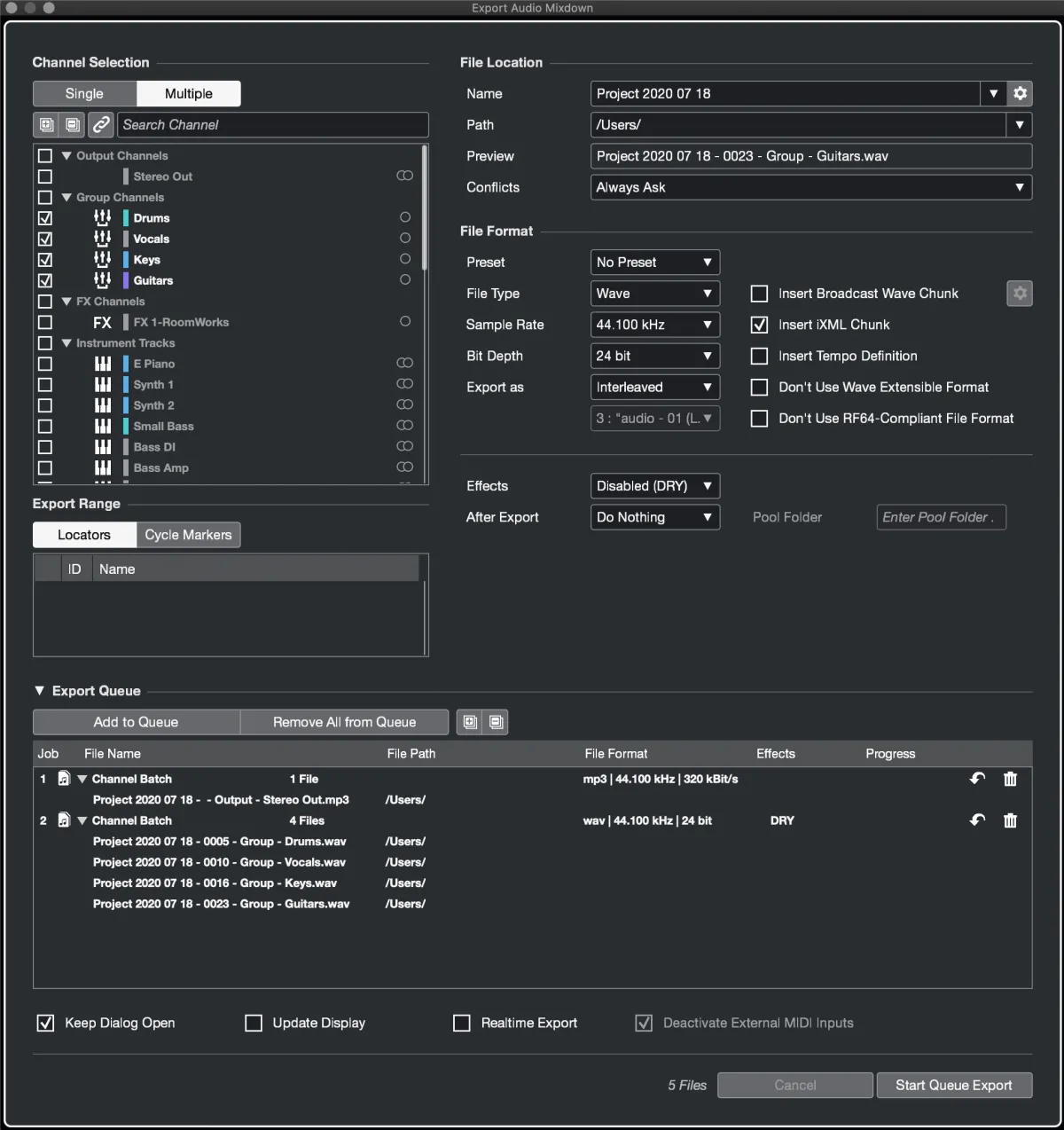
Sync Music – Different styles, musical beds, used before TV shows, announcing new series/episodes, in movie trailers.
Sync Music – Different styles, musical beds, used before TV shows, announcing new series/episodes, in movie trailers.
Big drum sounds
Editable hit points
Original music or Soundalikes
How to get your music in front of the right
people. Who are the right people? How does the business of Sync music work?
Spotify listening playlist – PROMO Music/Sync playlist.
HOMEWORK – Back to the Future cue
WEEK 17 PART TWO - TRAILER MUSIC, MUSIC PITCH PART TWO
Review students’ Titanic cue
LIVE Scoring – Trailer ending sample (last 15 seconds)
BIG ending, fast and frantic
Rise, Post Hit, then a sparkly thing at the end
Samples Libraries good for Trailer sounds
WEEK 18 PART ONE - VIDEO GAME MUSIC AND INDUSTRY
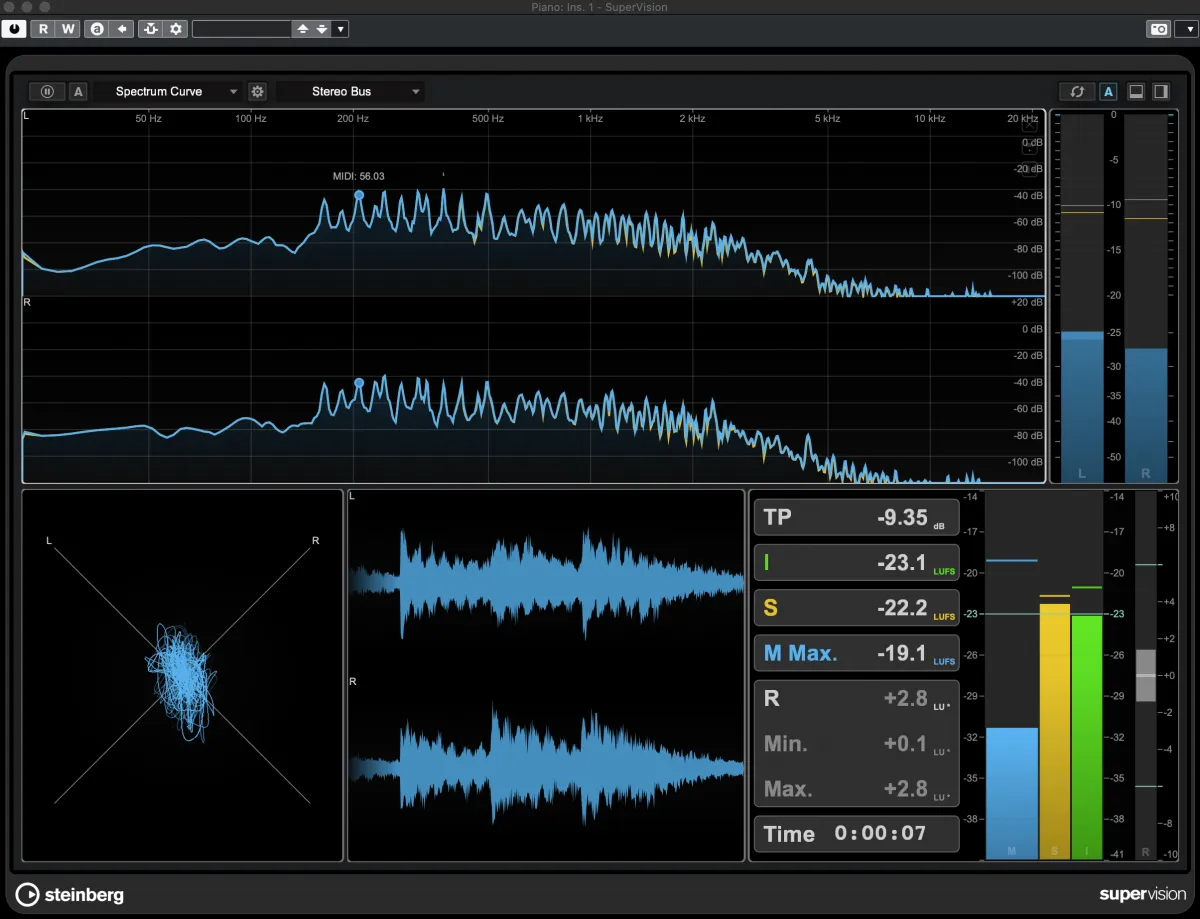
Video Game Music – Non-linear, think in “blocks” of music
Must loop right at the zero point and create a tiny fade at the front and the end. Snap to Zero Crossings.
Rise, Post Hit, then a sparkly thing at the end
Emotional Mapping
Vertical Resequencing, Horizontal Resequencing
Cross Fading
Transitions
Middleware – Game Audio Engine
Spotify listening playlist – Video Game Music Mix
Spotting session – Video game cue “sections”. Deliver loopable audio regions for selected parts of the game.
Review students’ Back to the Future cue
WEEK 18 PART TWO - ADVANCED CHORDAL AND TECTURAL SCORING TECHNIQUES
Review students’ Bank to the Future cue
LIVE Scoring – Leading Shapes, Whole Tone Scale – Go from Lydian shape to resolution, which needs to modulate somewhere else. Use Leading or Common Tone resolutions style.
Leading Shapes, Whole Tone Scale – very useful if someone comes to a new place, or if there are mixed emotions.
Two whole tone scales – one starting on C and one starting on C#. Triads are all Augmented triads. Lots of Lydian Shapes in the Whole Tone Scale.
Leading Resolution
Common Tone Resolution
Alternate Root Notes

WEEK 19 PART ONE - MIXING AND MASTERING
How the Video Game music business works – special events, etc
Review students’ Video Game loops
Mixing & Mastering Considerations –
Think front to back – far to close
Where to put reverb plugin in the signal chain
Frequency Masking
Drum sample mixing
HOMEWORK – Toy Story cue
Students screenshare live and “show and tell” their mixing workflow for the Toy Story cue. Have DAW open to show us.
WEEK 19 - GUEST COMPOSER
Guest composer Gigi Meroni interview. Animation music specialist.
References for music given by Producers.
Are most of your episodes shorter these days?
Do you get writer’s block?
What are some good ways to try to get work when you’re just starting out?
Mixing Drums – Split them out and mix separately – LOTS of detail regarding drum positioning, panning, bleed, overhead mics, EQ ranges for each drum type, etc.

WEEK 20 PART ONE - PERSONAL PLAN, BUSINESS DEVELOPMENT, FINAL FULL EPISODE
Review students’ Toy Story cue and DAW Mixing/Mastering workflow
HOMEWORK – Wolf Lodge FINAL 24-minute episode cue
Theme for each character
ScoreCraft Academy Post Class Action Plan review
20 questions to answer in detail about what concrete things you will do within different timeframes to get you further along in your composing career.
WEEK 20 PART TWO - SPEED WRITE
Review students’ Toy Story cue and DAW Mixing/Mastering workflow
LIVE Scoring – Speed & Accuracy – How far have you come?
Section vs Section of Orchestra contrast. Write one complete section of the orchestra by itself, not across sections, and write it into another section of the orchestra.

WEEK 21 PART ONE - SYNTHESIS
“Analog Synths Explained” from Groove 3 video by Scott Dugan
Oscillators, Filters, Envelope Generator,
Attack/Decay/Sustain/Release ADSR, Low Frequency Oscillator (LFO’s)
Favorite analog synth plugins and hardware.
WEEK 21 PART TWO - GETTING PAID,DELIVERABLES, LIVE SOUND DESIGN SESSION
Music Library Business format and payment process, royalties & publishing
LIVE Scoring – Sound Design Synthesis – Learn to use an LFO. Write a 20 second Intro to a trailer.
Omnisphere’s LFO – How to assign and use LFO’s

WEEK 22 PART ONE - BRAND DEVELOPMENT, DIRECTOR PRODUCER INTERVIEWS
What is your BRAND? It’s more than just music. It’s your journey. Document your journey, and share it! Do it in a way that will inspire people.
What will you bring to a project?
Why am I right for the project?
Michael interviews each student with the questions above.
Important concepts to convey to potential project managers -
I’m an expert, not a jerk about it.
I have a passion for music.
I have a passion for the project.
WEEK 22 PART TWO - PERSONAL DEVELOPMENT, SCORE REDUCTIONS
Conductor’s Score Reductions review
Scherzo for Motorcycle and Orchestra score reduction and analysis Indiana Jones (NMK Music)
Finlandia score reduction and analysis (NMK
Music)
LIVE Scoring – Sound Design Synthesis – Learn to use an LFO. Write a 20 second Intro to a trailer.
Uncommon Sense for Creative People – Whitty-isms
Submit “My Strengths and Weaknesses” paragraphs
to Michael. Notice how they may have changed since the beginning of the class.
WEEK 23 FINAL WRAP
No Zoom – just hanging together.
“Alan Silvestri breaks down the composing
workflow behind his blockbuster scores” (by Native Instruments) video
“Watch this every day and change your life –
Denzel Washington Motivational Speech 2023” by AlexKaltsMotivation video
Final
WEEK 1 PART ONE - CHORDAL STATE LECTURE

Chord States – constantly change based on harmony, melody, and film emotion
- Grounded state versus Ungrounded state.
- Grounded states and examples
- Ungrounded states examples including altered tone degrees or dissonance.
- Tools to use in between Grounded and Ungrounded, when you don’t know what the emotion will be:
- Lydian Mode “chord” – Root + Major Third + Flatted 5th
- Augmented triad example
- Suspended triad
- Intervallic triad
Spotify Listening – Film Score Intensive 1 playlist.
Homework Session – Thor Love & Thunder cue
WEEK 1 PART TWO - SPOTTING, DIALOG, SCORING DEVICES
Questions to ask at a Spotting Session
Writing around dialogue
Musical Devices – Key, Mode, Register, Tempo, Density, etc
Review Michael’s Thor cue – introduction to the review process
WEEK 2 PART ONE - Animated Scoring and intro to Harmonic textures
Review of students’ Thor cue
Monophonic Orchestration Style (#1) from George Frederick McKay’s Creative Orchestration – 8 Orchestra Textures
- Can be a solo instrument, doubled in octaves, or unison at same register with different instruments
• Homework – Sonic the Hedgehog cue.
WEEK 2 PART TWO
Review of students’ Thor cue
WEEK 3 PART ONE - Expanded Harmony and intro to comedy writing
Chordal Harmony (#2) and Onomatopoeia (#8) Orchestration Style
- Chordal Harmony – melody is supported by chords, without countermelody or conter-rhythm, in its entirety.
- Onomatopoeia – music sounds like its subject – any musical device you can think of.
Review of students’ Sonic cue
Kids’ Music and Comedy – Types of writing – bumper-based shows, rock/pop, cheesy and sparse, short stings or reactionary scoring, electronic/EDM, classic lo-fi, instrumentation, etc.
Homework – Little Margo cue
WEEK 3 PART TWO - THURSDAY-SCI FI Music, Chromatic Expansion and Hans Zimmer Music
Review of students’ Sonic cue
“How DUNE Composer Hans Zimmer created the Oscar-winning score l Vanity Fair” YouTube video
Review of students’ Little Margo cue
WEEK 4 PART ONE - Chromatic expansion, polyphonic texture, Sound design drones
Polyphonic Writing,Orchestration Style – consists of two or more simultaneous melodic lines. Similar to fugues or counterpoint. Maybe side by side to start, then together.
Spotify listening playlist – Polyphonic Harmony
Chromatic Expansion – Take the top voice and go up chromatically while chords change underneath.
Review students’ Little Margo cue
Making a Drone using a Synth Plugin
Homework – Mandalorian cue
WEEK 4 PART TWO - LIVE SCORING “STAR WARS” SPEED WRITING
LIVE Scoring session – Star Wars Carbonite – spotting and scoring
Loopback sample setup
WEEK 5 PART ONE - Modulations, secondary harmonic dominants, James Bond Music(SPY)
“Kobe Bryant’s Greatest Speech – BEST Motivation Ever” YouTube video
Review of students’ Mandalorian cue
Secondary Harmonic Dominants (teoria.com) – method of prolongation of the chordal structure and movement to another chord or key, including false cadences.
Spotting session – Golden Eye cue
Spotify playlist – Bond Music – Spy music – review instrument palette and playing styles.
WEEK 5 PART TWO - Templates Intro including libraries, MIDI CC
“John Barry and David Arnold – The Music of James Bond” YouTube video – music review
MIDI CC’s – 1, 7, & 11 – how to get a quick and dynamic response from brass and strings.
Michael shares a look at his Template and favorite Libraries.
WEEK 6 PART ONE - James Newton Howard, Trailer music,
“The Pretty Woman soundtrack changed my career / James Howard Newton on Composing” YouTube review.
Review of students’ Golden Eye cue
Trailer & Promo Music – both part of music library music
- Promo – Station promotes a new show or episode coming up
- Trailer – written in shorter sections, not a lot of modulation or melody, with editable hit points, ostinato, swells, etc.
- Spotting session – Joker Trailer cue
WEEK 6 PART TWO - Guest in depth dive of Vienna Ensemble and Midi mapping/articulations
Guest teacher Steve Steele – Creating Articulation Maps, Vienna Ensemble Pro, Babylon Waves Art Conductor, MIDI CC’s, creating a workflow and Aux’s in your Template in detail.
WEEK 7 Part 1 - Sound Design, Reharm progressions, Motifs and themes
Sound Design – anything non-orchestral or non-band oriented
- Best chance of success in trailer music if you are good at sound design – more important than how good you are at orchestral music.
Spotify listening playlist – Sound Design
Incorporating Sound Design alongside Orchestral music in trailers, so you can hardly tell which is which. Strings and Synths made to sound like one thing – together.
Review of students’ Joker Trailer cue
Spotting session – Star Wars Return of the Jedi cue.
WEEK 7 Part 2 - Reharm discussion including John Williams, Hybrid Brass
Reharmonization – cool chord progressions
- vi-IV-II is a very powerful one, cinematic, gets you out of one key
- vi-IV-VII keeps building and overcoming.
- Variations: I-iv6-II Great for REVEALS with the last chord
Hybrid String-Synth and Brass-Synth creation
- o How to make a Hybrid Synth & Orchestral String instrument from scratch, including many FX plugins
Star Wars Theme Reharmonization ideas
WEEK 8 PART 1 - SATB Scoring, Homophonic textures, Musicals
Homophonic Texture orchestration style – Melody with texture of chords underneath. SATB writing.
Review of students’ Star Wars Return of the Jedi cue.
Homework – Lion King cue
WEEK 8 Part 2 - LIVE SATB SCORING, VOICE LEADING in film Scores
Review of students’ Star Wars Return of the Jedi cue.
LIVE Scoring – SATB
“How to Get From Chord to Chord – Voice Leading Music Theory by Odd Quartet” YouTube video review
“The Orchestration Method that ALWAYS Works by Ryan Leach” YouTube video review.
WEEK 9 Part One - ADVENTURE MUSIC, Advanced Orchestral Devices
Flying and Adventure music – instrumentation and characteristics
Review of students’ Lion King cue
Homework – Jurassic Park cue
Orchestral Devices
- Bi-tonal division – ability to superimpose other modes over/under your melody
- Metric Modulation
- Elongation
- Melodic Counters
- Register Division
Analysis of 1 minute of John Williams’ Jurassic Park Conductor’s score
WEEK 9 PART 2 - MUSIC BUSINESS PART 1, MUSIC LIBRARIES, BRAND DEVELOPMENT
Review of students’ Lion King cues
Analysis of Jurassic Journey to the Island
Music Business – Pitching to Music Libraries – What to Do
- Creating your own catalog, brand and unique perspective.
- Write a few paragraphs about your “Brand”.
WEEK 10 PART ONE - WESTERNS AND THEIR TRADITIONAL ORCHESTRAL DEVICES
Review of students’ Jurassic Park cue
Western Music review – instrumentation, characteristics, etc
- Western Sub-Styles –
- The Good, The Bad and The Ugly
- Aaron Copland Heroic style, such as Billy the Kid
Spotify listening playlist – Westerns FSS
Spotting session – Butch Cassidy cue
Review of Western music sample libraries
WEEK 10 PART TWO - WRITING TRANSITIONS, VERTICAL AND HORIZONTAL COMPOSITIONAL SYLES
Review students’ Jurassic Park cue
Transitionsin compositional scoring
- Trumpet Transition sample
- Displaced Entry Transition
- Major 7 on the V chord Transition
- Rhythmic Displacement Transition
WEEK 11 PART ONE - ORCHESTRAL REDUCTIONS, HOLST ANALYSIS AND USES
Review students’ Butch Cassidy cue
20th Century Orchestration Style –
- Holst: The Planets listening and review instrumentation and characteristics
Analyze “Mercury, The Winged Messenger” section from The Planets, and do a Score Reduction.
- Dovetailing – when you move the melody or something up and down in register and section of the orchestra.
- Major Tetrachords
- Staggered triads in the Harp
“The Planets: Mercury, the Winged Messenger Score Reduction and Analysis” YouTube video
HOMEWORK – Spiderman cue
WEEK 11 PART TWO - INVERVALIC WRITING,IN CLASS SCORE
Review students’ Butch Cassidy cue
Intervalic writing style (from Paraschetti book on 20th Century writing) – can be used under dialogue and can also be a way to transition between tension and release. The point is to create tension under the score without key and mode. Move by chord or by single notes. Every interval in a melody has an emotion. Review each one.
- Two levels to Intervallic writing – Melody and Harmonization
LIVE scoring – write a melody with 2 woodwinds, with 4 changes in the melody, 4 intervals. Harmonize with another instrument underneath. Note change in emotion.
WEEK 12 PART ONE - HYBRID SCORING INTRO
Review students’ Spiderman cue
Hybrid Sound Design Music inspired by Songs
How to make a Pulse from scratch, including FX plugins
- Favorite plugins and libraries
Spotting session – The Matrix lobby shootout cue
Spotify listening playlist – Hybrid Scoring
WEEK 12 PART TWO - ADVANCED SOUND DESIGN AND PROJECT PITCH CREATION
Review students’ Spiderman cue
Stylus RMX and REX files
Audio Mangling tools and favorite plugins
LIVE scoring – Record something audio, chip it up, reverse, delays, distortion, glitches, etc. Make an instrument out of it.
WEEK 13 PART ONE - MUSIC OF JERRY GOLDSMITH, SCI FI, HORROR MUSIC
Review students’ The Matrix cue
Horror Musicinstrumentation and characteristics, sample libraries
Alien soundtrack by Jerry Goldsmith analysis
Spotify listening playlist – Week 4 FSS Horror
Spotting session – Prey (Predator 7) Final Battle Predator vs Naru Fight Scene cue
WEEK 14 PART ONE - ATONAL MUSIC
Review students’ Prey cue
Atonal music style – instruments, characteristics, sample libraries
- Uses shapes and colors outside key and mode.
- Doesn’t have to be dissonant all the time.
- Nebulous emotional center
- Two ways to increase emotional intensity – speeding up or down, crescendo/decrescendo
- Homogenous instruments or Non-Homogenous instruments
Spotting session – Mizimono cue (Hannibal season finale)
Spotify listening playlist – Atonal Class Music
Ideas for Scoring Atonal Music
- 12-tone system of writing
- Use Intervals in dissonant shapes
- Alternate mild consonant interval to a more dissonant interval in succession
- Clusters
WEEK 14 PART TWO - SWITCHING STATES AND EMOTIONS RAPIDLY, MIDI MOCKUP
Review students’ Prey cue
LIVE Scoring – Atonal to Tonal – Grounded to Ungrounded
How to Record Initial Volumes into MIDI Instrument Tracks (and Gainstaging)
- Adjusting CC’s on instruments, stems, leaving headroom on the master bus
WEEK 15 PART ONE - TEAM SCORING WEEK, BERNARD HERMANN
Spotify listening playlist – Film Score History – Bernhard Herman, Vertigo & Psycho film scores
Review students’ Mizimono cue
Working with a Team – Work in pairs remotely to write Great Wolf Lodge cue.
- Some of the best film score composers today have teams – Hans Zimmer, Harry Gregson-Williams, etc.
- Who will write what? Style? Tempo? Key? Who will do the Deliverables to submit to Producer?
HOMEWORK – Great Wolf Lodge cue
WEEK 15 PART TWO-STACKS AND ENSEMBLE WRITING, MASTER BUSINESS PLANNING
Review students’ Mizimono cue
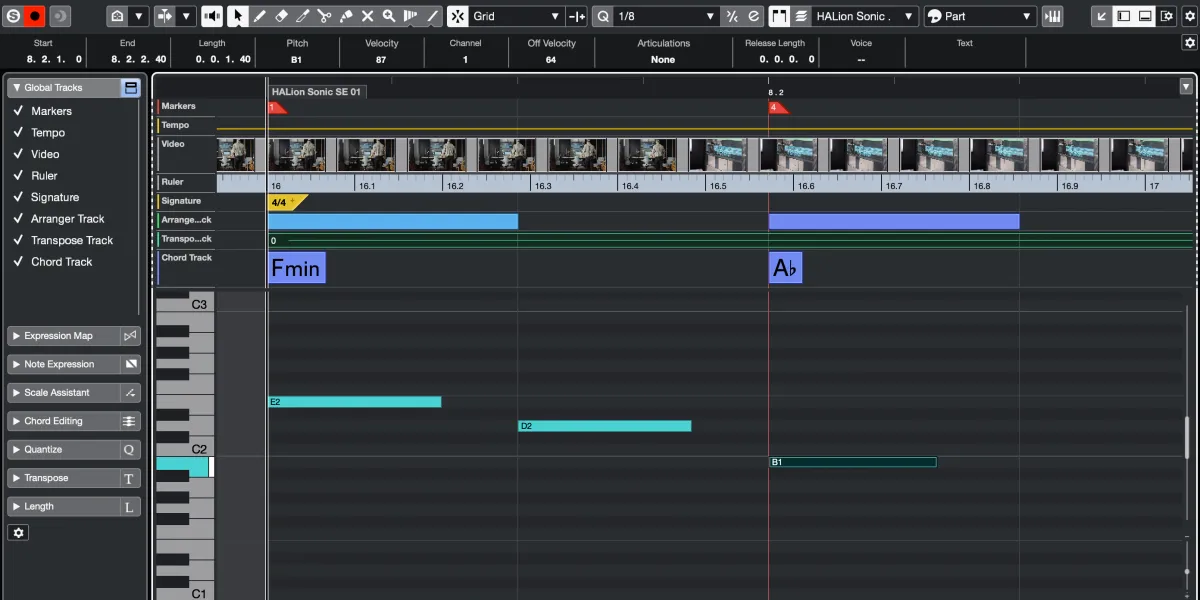
LIVE Scoring – Make an Instrument by Stacking instruments – Omnisphere is great for this. Trailer music and music library work, and Pop – these will require that you bring something new to the table. Can turn them into Risers, resample them, add FX plugins, etc.
Write a Master Plan – Don’t be on the No Plan Plan. Make a list of people, organizations, events, etc that you can access to promote yourself and make connections and relationships.
WEEK 16 PART ONE - COMPUTER TECHNOLOGY, ROMANTIC COMEDIES
Computer configuration – Tech spec discussion regarding requirements for a good computer or network – size, speed, etc.
Review students’ Great Wolf Lodge TEAM cue
Romantic & Romantic Comedy music –
- Instruments, writing styles, sample libraries
- Woodwinds feature heavily, Pizzicato, Lydian mode, mallets, not super heavily orchestrated, etc
Write a Romantic Theme for violin. Deliver a chart for just the violin part. Send audio of orchestration or accompaniment with separate click track. Next week, we’ll have a live violinist in the studio to play and record your theme.
Spotify listening playlist – Romantic Comedy Score review
HOMEWORK – Titanic cue
WEEK 16 THURSDAY - LIVE RECORDING IN CLASS WITH STRING PLAYER
WEEK 17 PART ONE - SYNC MUSIC,PROMO MUSIC, HITS SLAMS, DRUMS
Review students’ Titanic cue
Sync Music – Different styles, musical beds, used before TV shows, announcing new series/episodes, in movie trailers.
- Definite format to this style
- Big drum sounds
- Editable hit points
- Original music or Soundalikes
How to get your music in front of the right people. Who are the right people? How does the business of Sync music work?
Spotify listening playlist – PROMO Music/Sync playlist.
HOMEWORK – Back to the Future cue
WEEK 17 PART TWO - TRAILER MUSIC, MUSIC PITCH PART TWO
Review students’ Titanic cue
LIVE Scoring – Trailer ending sample (last 15 seconds)
- BIG ending, fast and frantic
- Rise, Post Hit, then a sparkly thing at the end
Samples Libraries good for Trailer sounds
WEEK 18 PART ONE - VIDEO GAME MUSIC AND INDUSTRY
Video Game Music - Non-linear, think in “blocks” of music
- Must loop right at the zero point and create a tiny fade at the front and the end. Snap to Zero Crossings.
- Emotional Mapping
- Vertical Resequencing, Horizontal Resequencing
- Cross Fading
- Transitions
- Middleware – Game Audio Engine
Spotify listening playlist – Video Game Music Mix
Spotting session – Video game cue “sections”. Deliver loopable audio regions for selected parts of the game.
Review students’ Back to the Future cue
WEEK 18 PART TWO - ADVANCED CHORDAL AND TECTURAL SCORING TECHNIQUES
Review students’ Bank to the Future cue
LIVE Scoring – Leading Shapes, Whole Tone Scale – Go from Lydian shape to resolution, which needs to modulate somewhere else. Use Leading or Common Tone resolutions style.
Leading Shapes, Whole Tone Scale – very useful if someone comes to a new place, or if there are mixed emotions.
WEEK 19 PART ONE - MIXING AND MASTERING
How the Video Game music business works – special events, etc
Review students’ Video Game loops
Mixing & MasteringConsiderations –
- Think front to back – far to close
- Where to put reverb plugin in the signal chain
- Frequency Masking
- Drum sample mixing
WEEK 19 - GUEST COMPOSER
Guest composer Gigi Meroni interview. Animation music specialist.
- References for music given by Producers.
- Are most of your episodes shorter these days?
- Do you get writer’s block?
- What are some good ways to try to get work when you’re just starting out?
Mixing Drums– Split them out and mix separately – LOTS of detail regarding drum positioning, panning, bleed, overhead mics, EQ ranges for each drum type, etc.
WEEK 20 PART ONE - PERSONAL PLAN, BUSINESS DEVELOPMENT, FINAL FULL EPISODE
Review students’ Toy Story cue and DAW Mixing/Mastering workflow
HOMEWORK – Wolf Lodge FINAL 24-minute episode cue
- Theme for each character
ScoreCraft Academy Post Class Action Plan review
- 20 questions to answer in detail about what concrete things you will do within different timeframes to get you further along in your composing career.
WEEK 20 PART TWO - SPEED WRITE
Review students’ Toy Story cue and DAW Mixing/Mastering workflow
LIVE Scoring – Speed & Accuracy – How far have you come?
- Section vs Section of Orchestra contrast. Write one complete section of the orchestra by itself, not across sections, and write it into another section of the orchestra.
WEEK 21 PART ONE - SYNTHESIS
“Analog Synths Explained” from Groove 3 video by Scott Dugan
- Oscillators, Filters, Envelope Generator, Attack/Decay/Sustain/Release ADSR, Low Frequency Oscillator (LFO’s)
Favorite analog synth plugins and hardware.
WEEK 21 PART TWO - GETTING PAID,DELIVERABLES, LIVE SOUND DESIGN SESSION
Music Library Business format and payment process, royalties & publishing
LIVE Scoring – Sound Design Synthesis – Learn to use an LFO. Write a 20 second Intro to a trailer.
Omnisphere’s LFO – How to assign and use LFO’s
WEEK 22 PART ONE - BRAND DEVELOPMENT,DIRECTOR PRODUCER INTERVIEWS
What is your BRAND? It’s more than just music. It’s your journey. Document your journey, and share it! Do it in a way that will inspire people.
What will you bring to a project?
Why am I right for the project?
Michael interviews each student with the questions above.
Important concepts to convey to potential project managers -
- I’m an expert, not a jerk about it.
- I have a passion for music.
- I have a passion for the project.
WEEK 22 PART TWO - PERSONAL DEVELOPMENT, SCORE REDUCTIONS
Conductor’s Score Reductions review
- Scherzo for Motorcycle and Orchestra score reduction and analysis Indiana Jones (NMK Music
- Finlandia score reduction and analysis (NMK Music)
Uncommon Sense for Creative People – Whitty-isms
Submit “My Strengths and Weaknesses” paragraphs to Michael. Notice how they may have changed since the beginning of the class.
WEEK 23 FINAL WRAP
No Zoom – just hanging together.
“Alan Silvestri breaks down the composing workflow behind his blockbuster scores” (by Native Instruments) video
“Watch this every day and change your life – Denzel Washington Motivational Speech 2023” by AlexKaltsMotivation video
• Final
WEEK 1: CHORDAL STATES
Introduction to changing chord states based on harmony and emotion. Tools for transitioning between grounded and ungrounded states. Spotify Listening: Film Score Intensive 1. Homework: Thor Love & Thunder cue.
WEEK 2: SPOTTING AND SCORING DEVICES
Questions for spotting sessions and writing around dialogue. Introduction to musical devices and review of Thor cue.
WEEK 3: EXPANDED HARMONY AND COMEDY WRITING
Chordal harmony and onomatopoeia orchestration. Exploration of kids' music and comedy writing. Homework: Little Margo cue.
WEEK 4: CHROMATIC EXPANSION AND POLYPHONIC TEXTURE
Polyphonic orchestration and chromatic expansion techniques. Spotify Playlist: Polyphonic Harmony. Homework: Mandalorian cue.
WEEK 5: MODULATIONS AND JAMES BOND MUSIC
Secondary harmonic dominants and spy music exploration. Spotting session: Golden Eye cue. Spotify Playlist: Bond Music - Spy music.
WEEK 6: TRAILER MUSIC AND TEMPLATES
Overview of trailer and promo music. Introduction to templates and MIDI CC techniques. Spotting session: Joker Trailer cue.
WEEK 7: SOUND DESIGN AND REHARM DISCUSSION
Incorporating sound design in trailers. Reharmonization techniques and hybrid brass creation. Spotting session: Star Wars Return of the Jedi cue.
WEEK 8: SATB SCORING AND LIVE SCORING
Homophonic texture orchestration and live SATB scoring. Homework: Lion King cue. Live Scoring: SATB.
WEEK 9: ADVENTURE MUSIC AND MUSIC BUSINESS
Adventure music characteristics and orchestral devices. Music business insights, pitching to libraries, and brand development. Homework: Jurassic Park cue.
WEEK 10: WESTERNS AND WRITING TRANSITIONS
Western music styles and writing effective transitions. Homework: Back to the Future cue.
WEEK 11: ORCHESTRAL REDUCTIONS AND IN-CLASS SCORE
Orchestral reductions and in-class score analysis. Homework: Spiderman cue.
WEEK 12: HYBRID SCORING AND ADVANCED SOUND DESIGN
Hybrid scoring techniques and advanced sound design. Spotting session: The Matrix lobby shootout cue.
WEEK 13: JERRY GOLDSMITH AND MIXING
Exploration of Jerry Goldsmith's work and horror music. Mixing concepts and techniques. Homework: Prey (Predator 7) cue.
WEEK 14: ATONAL MUSIC AND SWITCHING STATES
Atonal music exploration and ideas for scoring. Live Scoring: Atonal to Tonal. Homework: Mizimono cue.
WEEK 15: TEAM SCORING AND ENSEMBLE WRITING
Team scoring session and stacks/ensemble writing. Homework: Great Wolf Lodge cue.
WEEK 16: ROMANTIC COMEDIES AND LIVE RECORDING
Romantic comedy music styles and live recording session. Spotify Playlist: Romantic Comedy Scores. Homework: Titanic cue. Live Recording: String player.
WEEK 17: SYNC AND TRAILER MUSIC
Sync music styles and the business of sync. Live Scoring: Trailer ending sample. Homework: Back to the Future cue.
WEEK 18: VIDEO GAME MUSIC AND CHORDAL SCORING
Video game music techniques and advanced chordal scoring. Homework: Toy Story cue.
WEEK 19: MIXING AND MASTERING
Mixing and mastering considerations. Homework: Toy Story cue.
WEEK 20: PERSONAL PLAN AND SPEED WRITE
Post-class action plan and a live speed-writing session.
WEEK 21: SYNTHESIS AND MUSIC PITCH
Introduction to synthesis and music pitch. Live Scoring: Sound Design Synthesis.
WEEK 22: BRAND DEVELOPMENT AND DIRECTOR INTERVIEWS
Brand development and personal interviews with students. Submit "My Strengths and Weaknesses" paragraphs.
WEEK 23: FINAL WRAP
No Zoom, informal session. Final inspirational videos and reflections.
TRAINING PROGRAM FOR NEW TALENTS
Learning And Breaking Down Scores From The Masters
It is a unique opportunity that each master class
breaks down one by one famous film scores to unveil the techniques used by celebrities of the seventh art, such as
John Williams, James Newton Howard, Danny Elfman, etc., so you can understand how musical pieces are created.
Discover how these greats have made you feel joy, sadness, anguish, panic, surprise, etc. when watching a scene. Then YOU will be using these techniques in your class scoring assignments
A Score to Picture Program
Learn from real professionals, with real world scoring assignments and feedback.
This is an opportunity to polish and put talent into practice, with personalized advice and step-by-step follow-up so you can apply special techniques and make a career as a film composer.
Classes, advanced mentoring by professional composers, and personalized tutorials that complement online learning aim to train and inspire the next generation of the music, film, and television industry and guide them to follow their passion.
Bring out the full potential of your talent!
Enroll in Our 5-Month Composer Academy/Intensive!
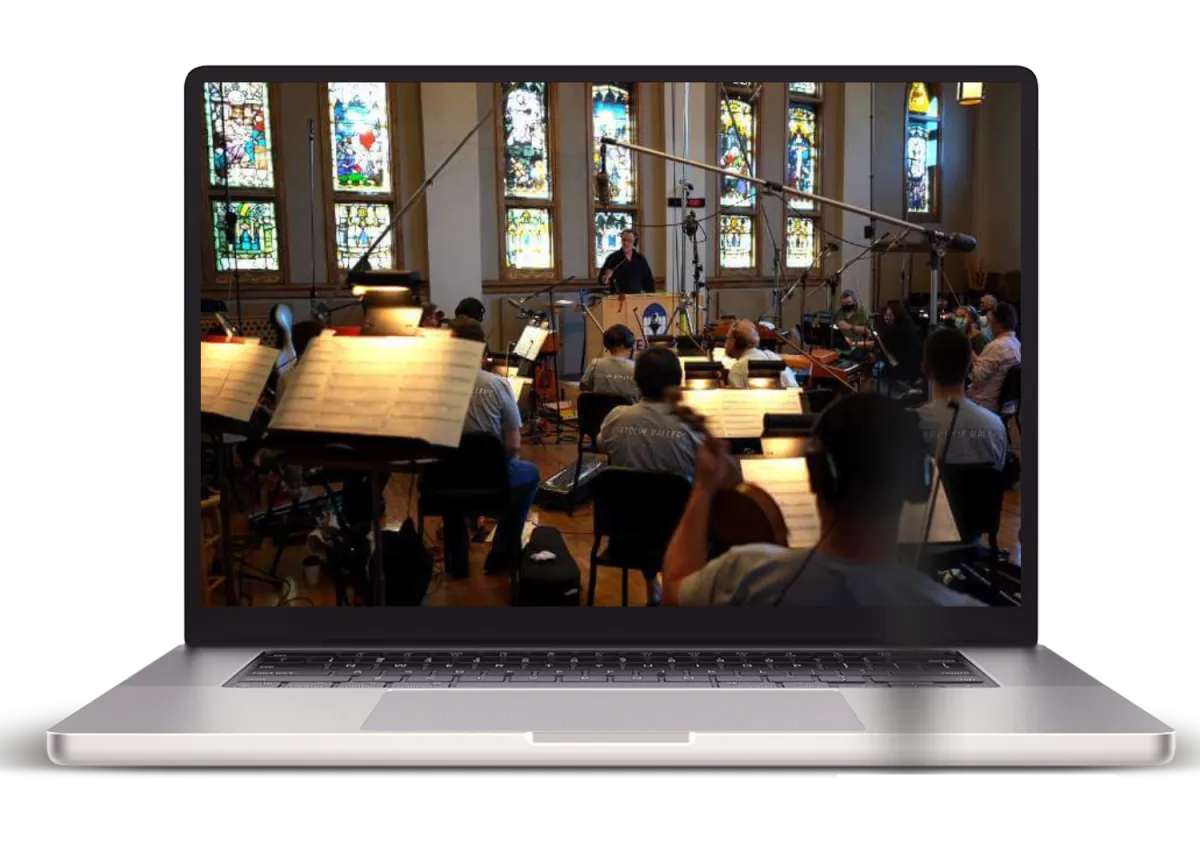
Awaken your passion for music and movies by enrolling in a 5-month composition intensive course/academy that will launch you into the world of film composition. Our film scoring programs provide rare access to expert film composers, reveal the secrets of iconic film scores, and provide hands-on creative exercises. Regardless of musical background, this is your chance to produce remarkable tunes that convey emotion on screen.
UNIQUE HANDS-ON APPROACH
We Take 5 Months And GET YOU READY!
Through masterclasses, participants gain:

Orchestration Coaching
Through masterclasses, participants
gain:

Teamwork
Multiple weekly assignments to develop their creativity. Working alongside and with fellow classmates

Film Scoring
Scoring assignments for films and pictures to associate the images with the music and convey emotions. Learn by scoring scenes in all genres

New Job Opportunities
The most outstanding students will have the chance to connect with real clients within the industry to apply the knowledge acquired. This program ends with actual pitch sessions to real world clients

Music Composition Program
The training program unveils five months of intensive deep learning so that you can understand film composition techniques correctly and take advantage of the best technological resources and create realistic professional pieces using your computer.

Mastering Technology And Sample Based Scoring
Learn how to create realistic mock-ups and use advanced MIDI control of sample based instruments, including articulation mapping, MIDI CC control and controllers, template building, using the latest sample libraries.
Register Now!
Early Registration Discount is Still Available.
Cost: $5000
Secure Your Spot With a $500 Deposit; Full Payment is Required by Dec 17th.

The class will start on Jan. 15, 2024.
Master Class From Successful Film Composers
Passion and affinity for music and film art.
Take your first steps and make this your profession with renowned film composers with decades of experience in the music industry and creators of memorable pieces in film and television.
This program gives you exclusive and
unique access to their creative process. They will teach you their film composition techniques, how they work, and how they create and select the piece to complement and give a touch of life to each scene.
You will learn what inspires them, how they create harmony and melody, and how they use notes and chords, so you can develop the necessary skills and abilities that will allow you to capture your inspiration and captivate the audience.
Who Can Apply to the Film Scoring Course?
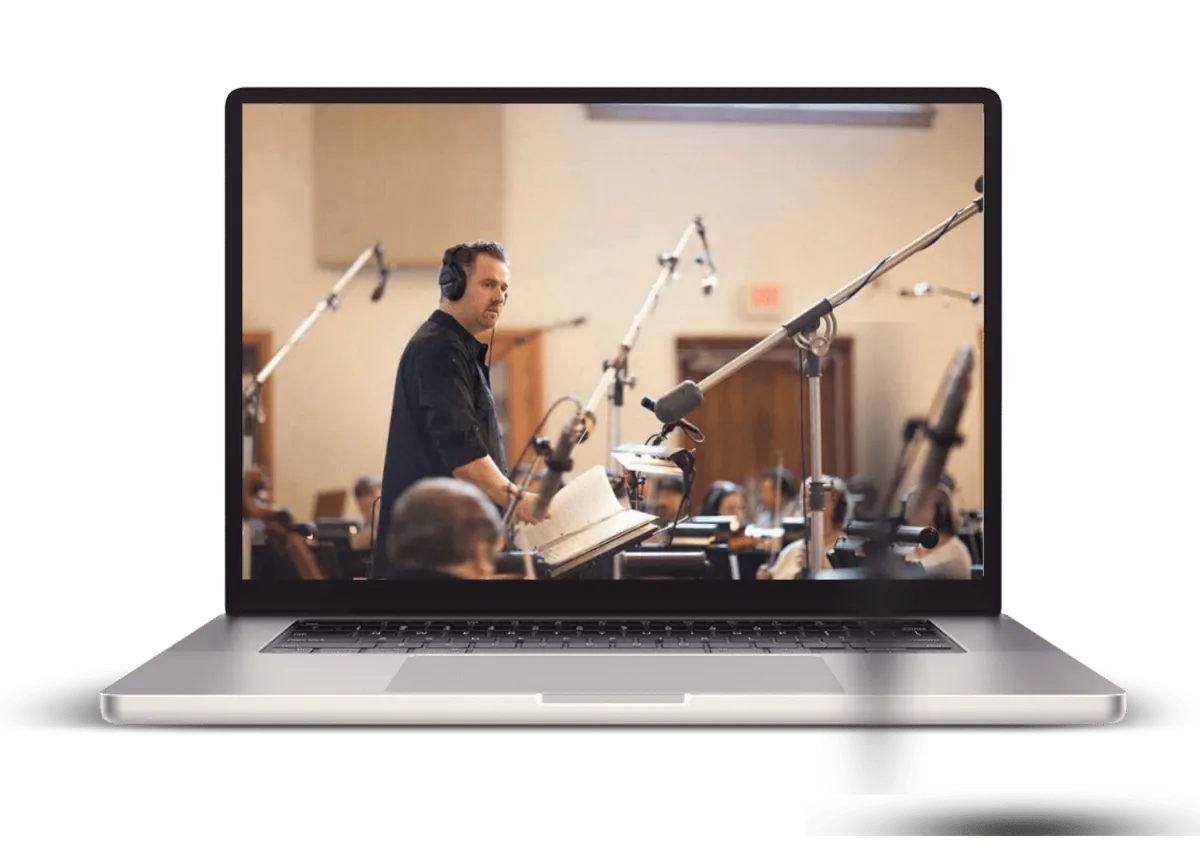
This music composition program is aimed at people with a passion and vocation for music and film who are interested in learning how to create high-impact musical compositions capable of transmitting emotions that transcend the screen.
We are interested in musicians with deverse musical backgrounds not just people with composition degrees. The best digital media composers are usually ones with a creative production or music background. Music reading is not necessary, but we encourage non readers to begin the process.
Who Can Apply to the Film Scoring Course?
This music composition program is aimed at people with a passion and vocation for music and film who are interested in learning how to create high-impact musical compositions capable of transmitting emotions that transcend the screen.
We are interested in musicians with deverse musical backgrounds not just people with composition degrees. The best digital media composers are usually ones with a creative production or music background. Music reading is not necessary, but we encourage non readers to begin the process.
Advanced Film Scoring Program.
Start date:
Jan 2024
Personalized mentoring:
throughout program
Master class:
2 times per week
Duration:
5 months
Teaching method:
online courses through Zoom
Cost:
$5,000 (Discounted)
How do I register for the course?
See step by step our candidate selection process.
Step One
Register
$500 deposit secure, secures your place, secures your spot in the program.
Step Two
Zoom Appointment
A friendly chat to tell us about your vocation, what inspires you, and what you hope for.
Step Three
Course Starts
January 15th
Final payment by December 17th,
Course starts January15th. Be ready for the most amazing film scoring program
Step One
Register
Please schedule an appointment with us and get the date and time for an online interview.
Step Two
Zoom Appointment
A friendly chat to tell us about your vocation, what inspires you, and what you hope for, and find out if you are a candidate for the program.
Step Three
Course Starts
January 15th
Be ready for the most amazing film scoring program
Begin Your Musical Journey
Take the chance to transform your passion into a career. Enroll now in our 5-month composition intensive course/academy and start on a revolutionary musical adventure.
Learn from the finest in the business, decode iconic soundtracks, and complete real-world composition assignments to combine your passion for music and movies. Our composer academy is here to cultivate your potential and assist you toward an exciting career in film composing, regardless of your musical background. Make music that transcends the screen by unleashing your creative genius. Your journey begins right now!
The Most Comprehensive Online Composer Training
Starting Jan. 15, 2024
Have more questions?
Feel free to schedule a call with our academic
advisor for further information.
Copyright ©2023 scorecraftacademy.com